Netplay

Host or join a network gaming session. Rediscover the joy of multiplayer games using RetroArch's builtin netplay lobby. You can also use the spectator mode to watch others play. Click the Lobby Browser button now to view Netplay Hosts! Don't forget to check out our Netplay document page!

Lobby Browser Check Documentation

Netplay

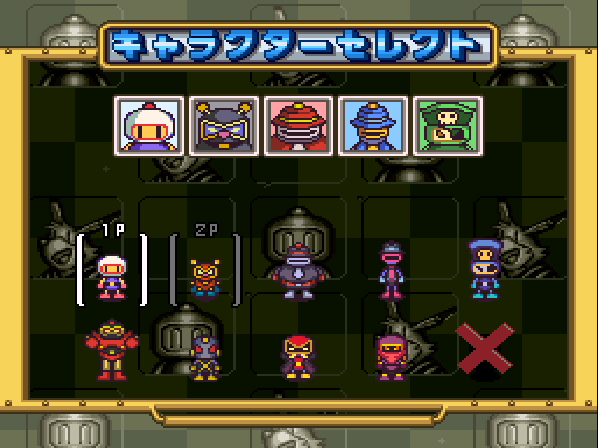
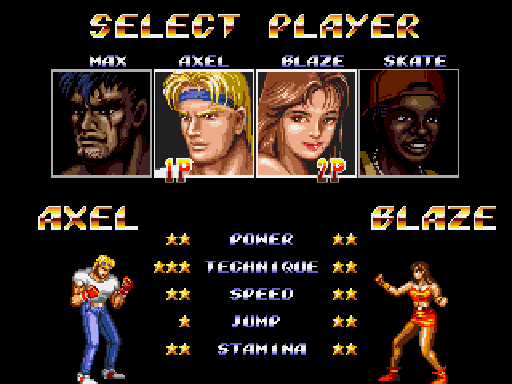
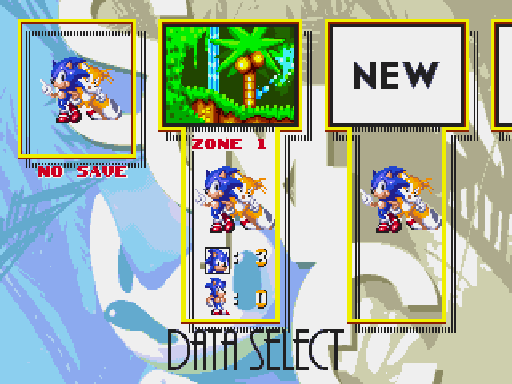
RetroArch enables you to play games online. You can challenge players around the world and compete on classic games like Mario Kart, Bomberman, Street Fighter, or team up on games like Streets of Rage or Sonic 3.

RetroArch relies on peer-to-peer networking to reduce network latency and ensure the best possible experience.

The lobby

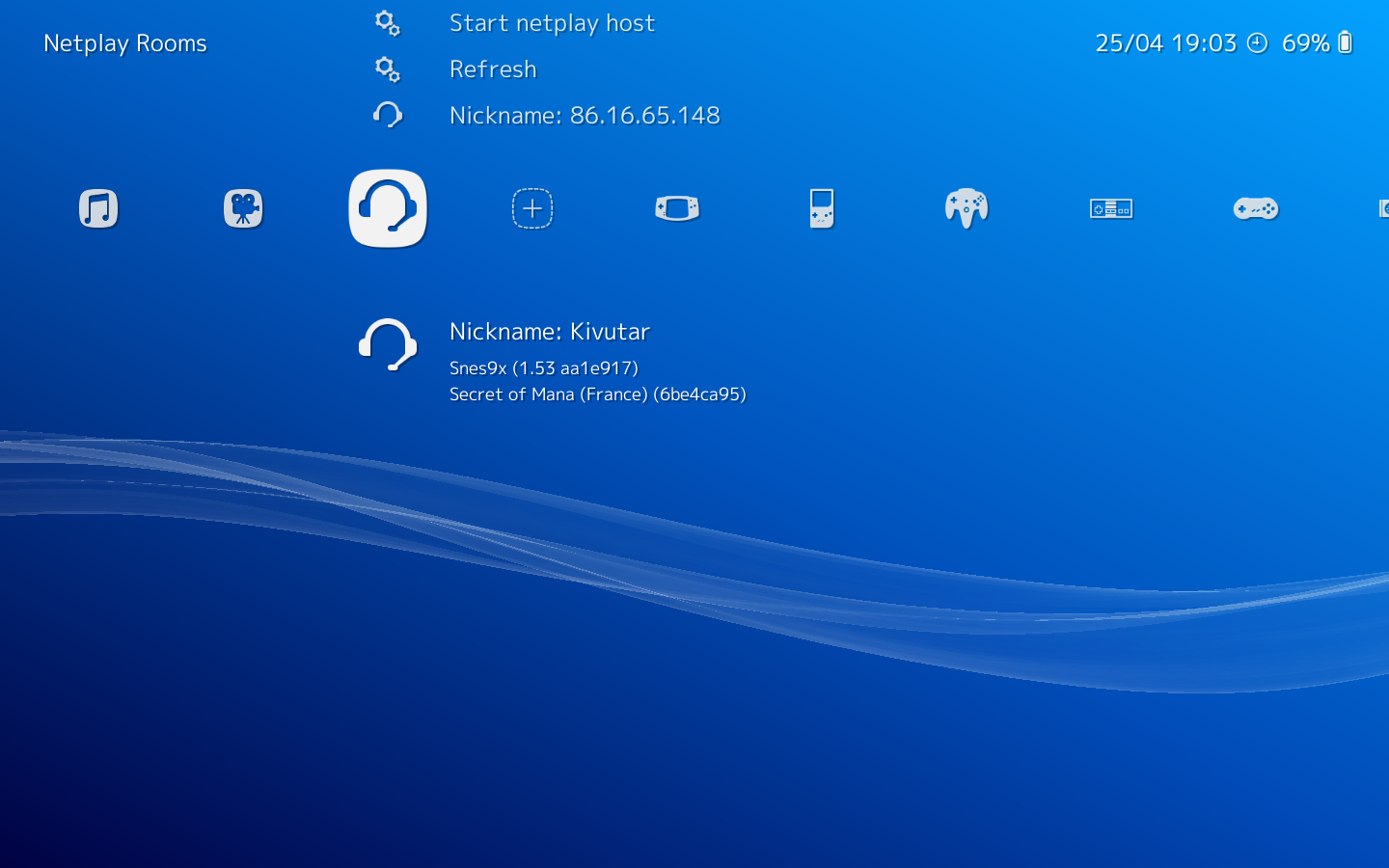
The most convenient way to try netplay is to use the lobby inside the menu.

You need an active internet connection and a router that supports UPnP port forwarding.

You will also need to own the same ROM as your partner and have it scanned and in your playlists. We recommend ROMs from the No-Intro sets.

To join a netplay room in the lobby, just refresh the room list and press A on a room entry.

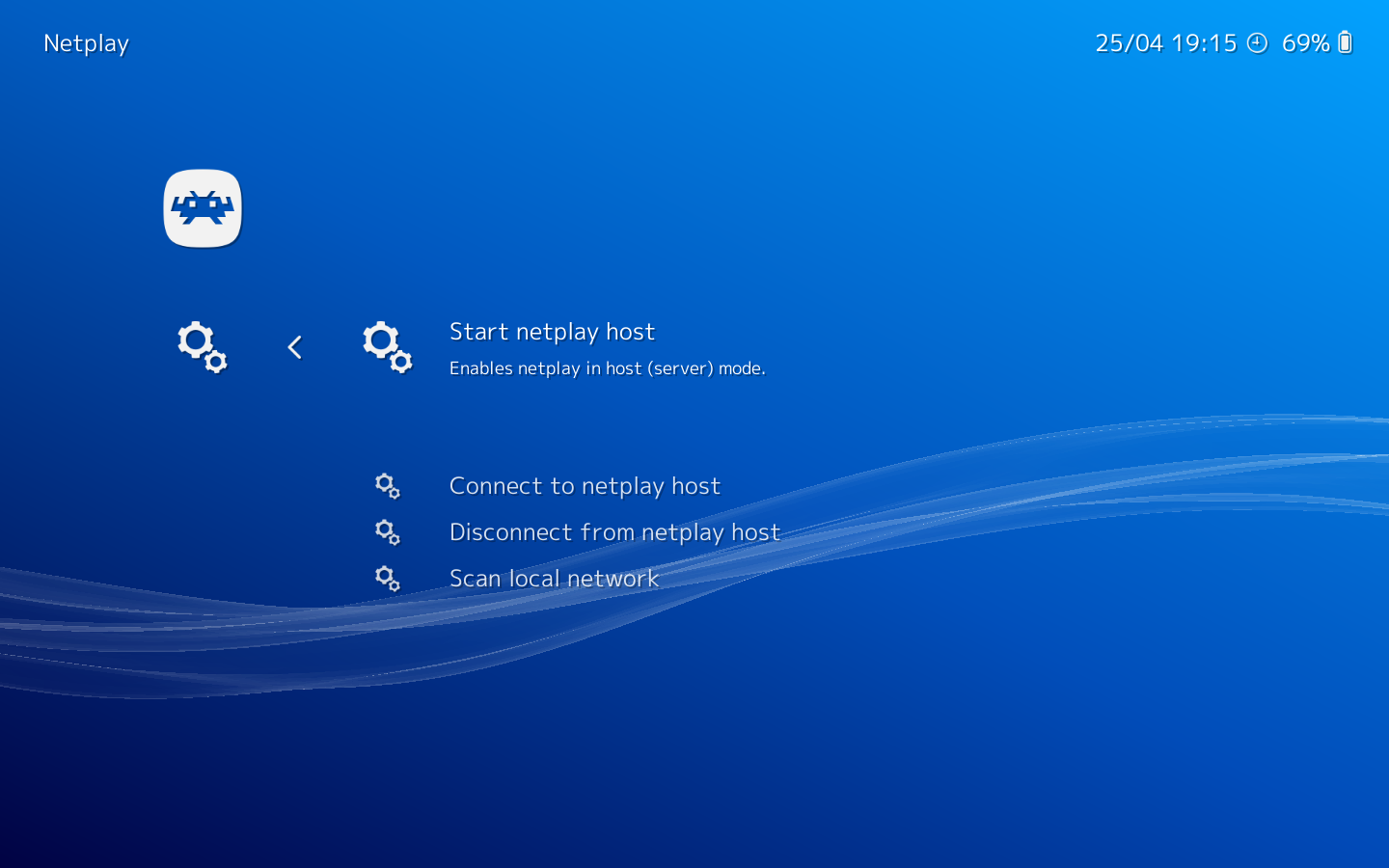
To host your own netplay session, press A on Start netplay host and a room will be created and announced publicly.

This lobby will also work for local rooms (on your home local network).

Manual netplay

Advanced users have the possibility to setup netplay manually.

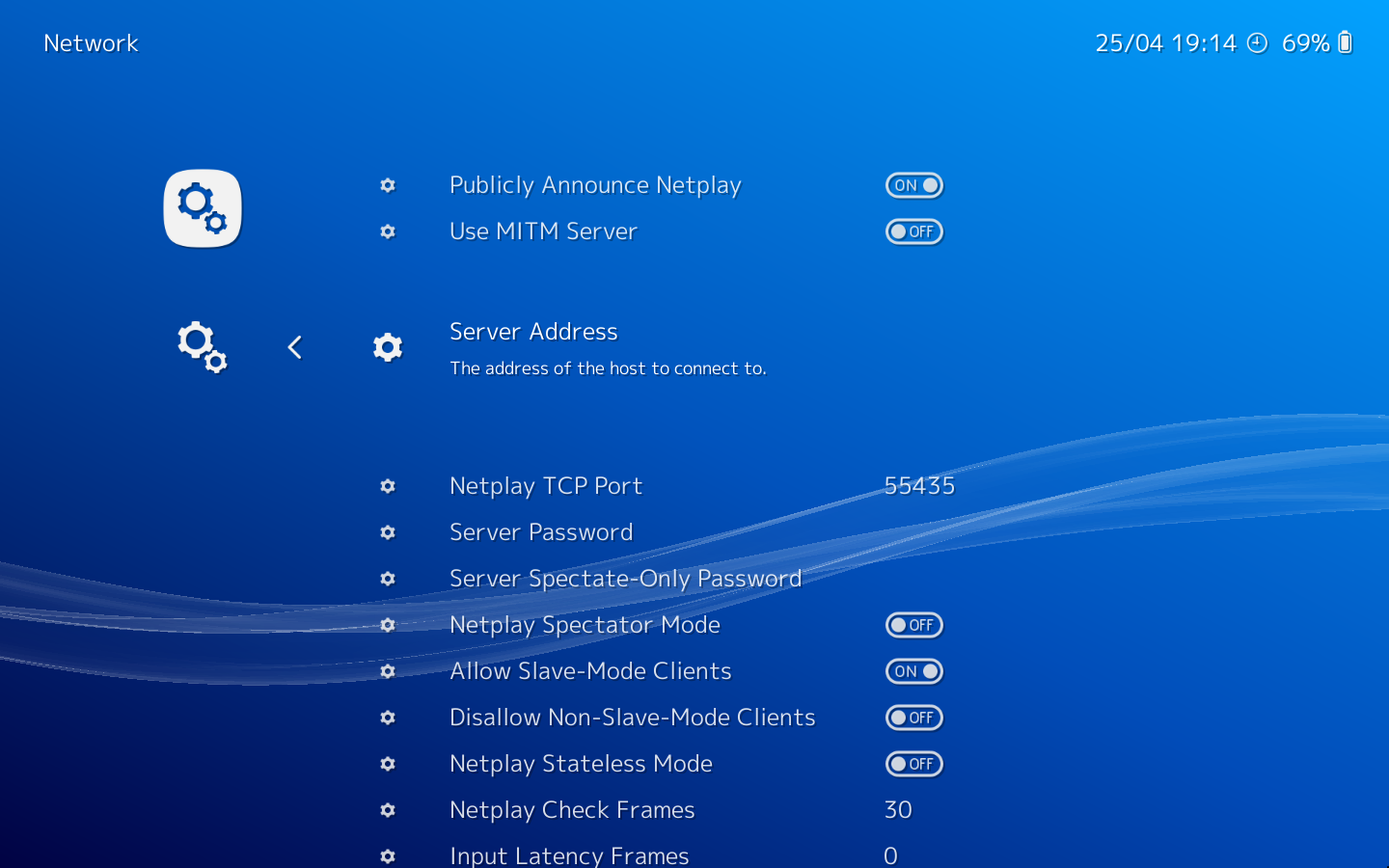
The Network Settings enables you to tweak how the network code will behave when you are acting as Server.

If you don't need NAT traversal, it can be disabled in the settings.

When you are acting as client, most of these settings will have no effect. The only things you will have to set will be the Server IP.

After you have configured netplay as you wish, launch a game and use:

  • Start netplay host to act as server
  • Connect to netplay host to act as client

How to Host

How to Join

How it works (technical breakdown)

RetroArch allows a second (or further) player, or spectators, to be connected via the Internet.

RetroArch's netplay code is based on replay, and provides netplay over unreliable networks free of input latency in the default configuration. Netplay supports up to 16 players and many spectators. Netplay in RetroArch is guaranteed¹ to work with perfect synchronization given a few minor constraints:

Cores are expected to support serialization for proper netplay behavior, but netplay will work in limited fashion with cores that do not support serialization. The experience will be far more smooth with serialization.

Netplay in RetroArch works by expecting input to come delayed from the network, then rewinding and re-playing with the delayed input to get a consistent state. At any given time, all netplay clients may be in inconsistent states, but once they receive each other's delayed data, they invisibly rewind to the last time they were consistent, replay with the new input, and reach a new state, notionally closer to the "correct", canonical state than the previous one. So long as both sides agree on which frame is which, it should be impossible for them to become de-synced, since each input event always happens at the correct frame.

Community

Join our Discord channels to find netplayers. Through Discord you would also be able to use voice chat to converse with others during gameplay.


Netplay

News

RetroArch 1.21.0 release

RetroArch 1.21.0 has just been released. Grab it here. Remember that this project exists for the benefit of our users, and that we wouldn’t keep doing this were it not for spreading the love to our users. This project exists because of your support and belief in us to keep going doing great things. We have […]

Continue reading

Introducing ROM Cleaner

Jesse Talavera here again! You may remember me from my work on melonDS DS, McSoftServe, and assorted improvements to RetroArch like microphones and XDelta softpatching. I’ve secretly been developing something brand-new that I’m itching to share with you. Although RetroArch was designed for retro game emulation, every now and then something comes along that breaks […]

Continue reading

Bliss-box 4-play advanced – RetroArch ready : Early bird offer inside

For a limited time you can pre-order yours before production begins. https://bliss-box.net/products/4-play-advanced   Compatibility Works with the existing software Has the same USB ID so that you do not need to reconfigure your software Has the same mapping, and code logic just faster with greater controller support Compatible with 4-Play/GP Cables Advantages over the 4-Play.   […]

Continue reading

LRPS2 – the new PlayStation2 core with a brand new Vulkan LLE renderer

We have a brand new PlayStation2 core, LRPS2. It’s a heavily modified version of PCSX2 custom made for the Libretro API, and it currently runs on Windows, macOS and Linux. The core code is modern and up-to-date unlike the old core and it no longer suffers from the serious drawbacks the older core had. It […]

Continue reading

RetroArch 1.20.0 release

RetroArch 1.20.0 has just been released. Grab it here. Remember that this project exists for the benefit of our users, and that we wouldn’t keep doing this were it not for spreading the love to our users. This project exists because of your support and belief in us to keep going doing great things. We have […]

Continue reading

RetroArch first program to support BlurBuster’s CRT beam racing simulator shader

We are excited to introduce a new shader that significantly improves motion clarity on modern displays, without the typical drawbacks associated with black-frame insertion (BFI) implementations. This shader is the work of Mark Rejhon from BlurBusters (blurbusters.com) and Timothy Lottes (creator of the original FXAA shader and the crt-lottes shaders). It leverages RetroArch’s recently added […]

Continue reading

PlayStation2 and the CRT TV

The PlayStation2 is a system designed almost entirely from the ground up for use with CRT TVs. Like any other game console built around analog video output, it is not designed around pixels or resolution, but scanlines and timing. Yes, there is a way to attach a VGA monitor for the official PS2 Linux toolkit […]

Continue reading

RetroArch 1.19.1 release

RetroArch 1.19.1 has just been released. Grab it here. Remember that this project exists for the benefit of our users, and that we wouldn’t keep doing this were it not for spreading the love to our users. This project exists because of your support and belief in us to keep going doing great things. We […]

Continue reading

RetroArch 1.19.0 release

RetroArch 1.19.0 has just been released. Grab it here. Remember that this project exists for the benefit of our users, and that we wouldn’t keep doing this were it not for spreading the love to our users. This project exists because of your support and belief in us to keep going doing great things. We […]

Continue reading

RetroArch on Apple App Store

RetroArch is now available on the Apple App Store. It is currently available for iPhone, iPad and tvOS. A macOS version on the Apple App Store is planned but no ETA. A new RetroArch version is also coming out soon.

Continue reading

Lakka – Raspberry Pi gets 240p Composite Video

Special community version of Lakka has been released! Raspberry Pi gets 240p Composite Video output support! Read more about it in this article here.

Continue reading

Introducing McSoftServe

Hi there, everybody! I’m Jesse Talavera, a libretro contributor. I’m primarily known in this community as the author of melonDS DS, but I’ve got some other exciting projects in the oven as well. Today I’d like to share with you something new that I’ve been working on for some time. Introducing McSoftServe, an emulator for […]

Continue reading

Vircon32 joins libretro/RetroArch

Written by: Carra Hi! I’m Carra and I created Vircon32, a new game console. My Vircon32 core was recently integrated into RetroArch, so I thought this could be a good opportunity to talk about both the console itself and my overall experience creating a Libretro core. What is Vircon32? Vircon32 is a 32-bit virtual console […]

Continue reading

Geolith emulator ported to libretro

We have the pleasure of announcing a great new emulator core, the Neo Geo emulator Geolith. The upstream author of the Jolly Good Emulation project broke out this core and ported it to libretro to make it available to as many users as possible, and we’re happy to welcome it into the fold. Historically, Neo […]

Continue reading

RetroArch 1.17 – new netplay features

RetroArch 1.17 expands Netplay to support playing multiplayer games that were originally played on two or more separate consoles or computers connected together. This is currently supported by two cores: DOSBox Pure and gpSP. In DOSBox Pure it is now possible to play DOS and early Windows multiplayer games that used IPX, Ethernet or a […]

Continue reading